

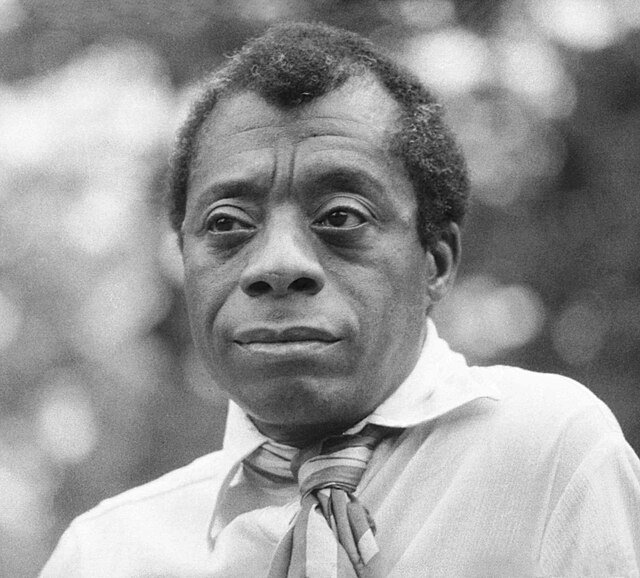
James Arthur Baldwin was born in Harlem and became one of the most important writers and thinkers of the twentieth century. His unflinching examination of race, sexuality, and the American condition produced some of the most powerful prose in the English language—words that burned with prophetic urgency and continue to illuminate our present moment.
From the Pulpit to the Page
The grandson of a slave, Baldwin grew up in poverty as the eldest of nine children. At fourteen, he became a child preacher in Harlem's Pentecostal churches. Those three years in the pulpit, he later said, "turned me into a writer, really, dealing with all that anguish and that despair and that beauty." The cadences of the church would forever echo in his prose.
In 1948, feeling stifled by American racism and unable to fully live as a Black gay man, Baldwin moved to Paris with $40 in his pocket. There, at a remove from America, he found the distance necessary to write about it with devastating clarity.
"Not everything that is faced can be changed, but nothing can be changed until it is faced."
— James BaldwinThe Fire This Time
Baldwin's 1953 novel "Go Tell It on the Mountain" drew from his Harlem childhood and is now considered one of the greatest American novels. But it was his essays—particularly "Notes of a Native Son" (1955) and "The Fire Next Time" (1963)—that established him as the moral voice of the Civil Rights Movement.
"The Fire Next Time" was so incendiary it put Baldwin on the cover of TIME magazine. In it, he warned white Americans about the consequences of their oppression while holding out hope that the nation might still "achieve our country, and change the history of the world."
His 1965 debate with William F. Buckley at Cambridge University on the question "Has the American Dream been achieved at the expense of the American Negro?" remains one of the most influential debates on race ever held.
Bearing Witness
Baldwin was close friends with Medgar Evers, Malcolm X, and Martin Luther King Jr.—all of whom were assassinated. He marched at the 1963 March on Washington and the 1965 Selma to Montgomery marches. The FBI accumulated 1,884 pages on him during an era when they gathered only 276 on Richard Wright.
As a gay Black man, Baldwin navigated the intersection of multiple identities decades before intersectionality had a name. His novel "Giovanni's Room" (1956) explored homosexuality with a frankness that shocked readers and publishers alike.
"You think your pain and your heartbreak are unprecedented in the history of the world, but then you read. It was books that taught me that the things that tormented me most were the very things that connected me with all the people who were alive, who had ever been alive."
— James BaldwinMajor Works
- "Go Tell It on the Mountain" (1953) – ranked among TIME's 100 best English-language novels
- "Notes of a Native Son" (1955) – essay collection on race in America
- "Giovanni's Room" (1956) – groundbreaking novel on sexuality
- "The Fire Next Time" (1963) – urgent warning on race relations
- "If Beale Street Could Talk" (1974) – adapted to Oscar-winning film (2018)
- "I Am Not Your Negro" (2016) – Oscar-nominated documentary based on his unfinished memoir
James Baldwin died on December 1, 1987, in Saint-Paul-de-Vence, France. His friend Toni Morrison gave his eulogy. Today, his words remain essential reading for anyone seeking to understand America—a nation he loved enough to tell the truth about. "I love America," he once said, "more than any other country in the world and, exactly for this reason, I insist on the right to criticize her perpetually."