

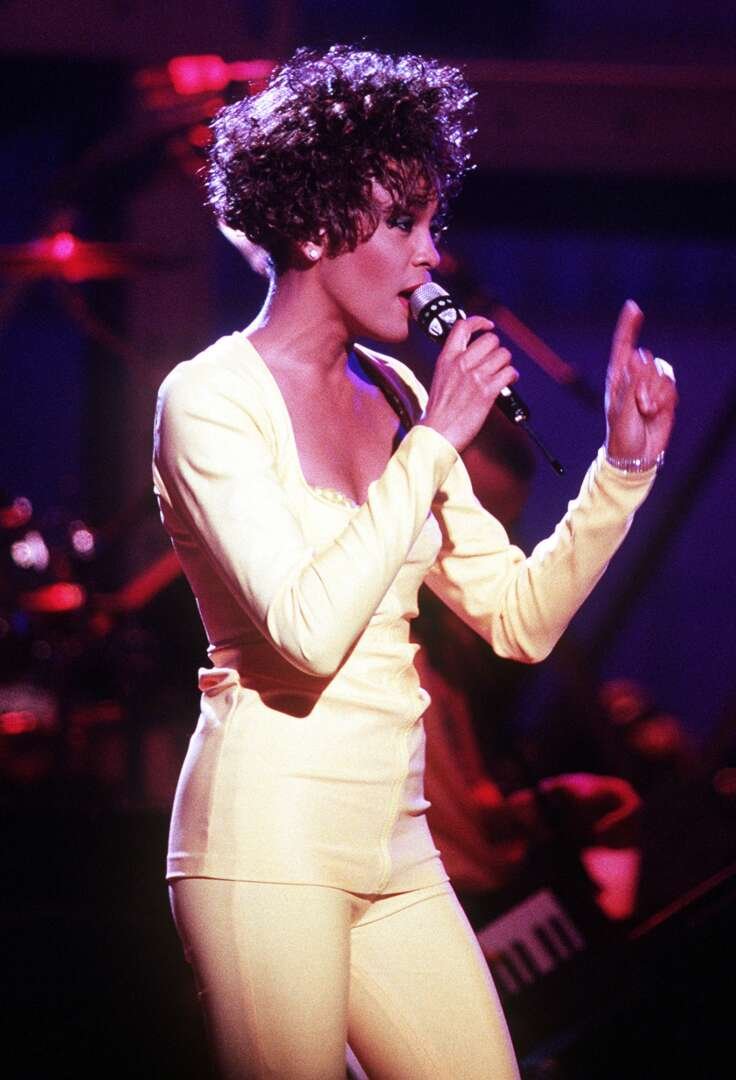
Close your eyes. Think of any Whitney Houston song. Now try to imagine anyone else singing it.
You can't.
That's what made Whitney Houston singular. Not just the three-octave range. Not just the technical perfection. It was the way she made every song hers—the way she could take a note and bend it, stretch it, send it soaring into places that gave you chills. When Whitney sang, you didn't just hear music. You felt it in your chest. You felt it in your soul.
The Gift
She was born into music like royalty is born into palaces. Her mother, Cissy Houston, was a legendary gospel singer who'd backed Aretha Franklin and Elvis. Her cousin was Dionne Warwick. Her godmother was Aretha herself. Young Whitney grew up surrounded by voices that could shake the rafters of New Hope Baptist Church in Newark—and somehow, impossibly, her voice was the most remarkable of them all.
Cissy trained her daughter with the rigor of someone who understood both the gift and the burden of that kind of talent. Whitney learned breath control, phrasing, the gospel tradition of letting the spirit move through you. By the time she was a teenager singing backup for her mother, the industry was already circling. They knew what she was. Everyone who heard her knew.
"I decided long ago never to walk in anyone's shadow. If I fail, or if I succeed, at least I'll live as I believe."
— "Greatest Love of All"
The Arrival
When Clive Davis signed Whitney Houston, he wasn't taking a chance. He was recognizing inevitability. Her 1985 debut album didn't just sell 25 million copies—it announced a new standard. Three consecutive #1 singles: "Saving All My Love for You," "How Will I Know," "Greatest Love of All." No debut artist had ever done that. The rules didn't apply to Whitney.
Her second album broke more records. Seven consecutive #1 hits—surpassing the Beatles and the Bee Gees. "I Wanna Dance with Somebody" became the sound of joy itself. Every song she touched turned to gold, then platinum, then diamond. She wasn't climbing the charts. She was rewriting what the charts could measure.
The Moment
January 27, 1991. Super Bowl XXV. The country was at war in the Gulf. Tensions everywhere. And then Whitney Houston, in a white tracksuit, stepped up to sing the national anthem.
What happened in the next two minutes is difficult to describe to anyone who wasn't there—and unforgettable for anyone who was. She didn't just sing "The Star-Spangled Banner." She transcended it. Her voice rose and soared, and 750 million people around the world stopped breathing. When she hit "the land of the free," with that impossible run, that perfect power—it was more than a performance. It was a moment of pure, collective awe.
The performance was released as a single. It charted. It charted again after 9/11, when the country needed her voice once more. It remains the definitive version. It always will be.
"I like being a woman, even in a man's world. After all, men can't wear dresses, but we can wear the pants."
— Whitney Houston
The Bodyguard
In 1992, Whitney proved she was more than a voice. The Bodyguard made her a movie star, and its soundtrack became the best-selling of all time—45 million copies and counting. At its heart was "I Will Always Love You," Dolly Parton's song, which Whitney transformed into something eternal.
That opening. A cappella. No music. Just Whitney, holding the word "I" for what feels like forever, daring you to look away. Then the song builds, and builds, and when she hits the key change—that moment when she goes up instead of down, when she takes the song somewhere it's never been—it's not just singing. It's witnessing a miracle.
The song spent 14 weeks at #1. Dolly Parton herself said Whitney's version was so definitive that she could no longer sing it herself. "It's her song now," Dolly said. "She made it immortal."
The Struggle
The gifts that make someone extraordinary can also make them fragile. Whitney's voice was a blessing, but fame came with weight she never asked to carry. The scrutiny. The expectations. The pressure of being Whitney Houston every single day, in a world that wanted to tear her down as eagerly as it had built her up.
She struggled publicly in ways that made people forget, sometimes, what they were witnessing. But even in her hardest years, when her voice wasn't what it had been, she could still deliver moments of such raw, devastating beauty that you remembered: this was a once-in-a-generation talent. There would never be another.
"I'm not crazy about reality, but it's still the only place to get a decent meal."
— Whitney Houston
Gone Too Soon
Whitney Houston died on February 11, 2012. She was 48 years old.
The news hit like a physical blow. Not Whitney. Not yet. Not ever. At her funeral, Kevin Costner spoke about the young woman he'd cast in The Bodyguard—her doubt, her grace, her fear of not being enough. "Whitney, if you could hear me now," he said, "I would tell you: you weren't just good enough. You were great."
She was more than great. She was the voice—the standard by which all other voices are measured and found wanting. Two hundred million records sold. Six Grammys. Eleven consecutive top-ten singles. The numbers don't capture it. Nothing captures it except closing your eyes and pressing play.
Legacy
Every singer who reaches for a note they're not sure they can hit. Every performer who tries to put their whole soul into a song. Every person who's ever been moved to tears by music they've heard a thousand times. They're all living in Whitney Houston's shadow—and they know it.
In 2020, she was inducted into the Rock and Roll Hall of Fame. The honor was overdue, but honors always were for Whitney. She didn't need them. She had something better: a voice that made the whole world stop and listen.
Close your eyes. Press play. Let her sing to you one more time. She's still there—still soaring, still untouchable, still the greatest voice any of us will ever hear.
And we will always love her.
← Back to Black History Highlights