

We hear it constantly from clients, from friends, from strangers at open houses: "Should I rent or should I buy?" And every time, the same well-meaning advice follows. The financial news sites publish their monthly scorecards. The online calculators spit out a number. Your uncle at Thanksgiving has strong opinions.
Here's what we've learned working with buyers and sellers across Austin: almost all of that advice is built on the wrong question.
The right question isn't "rent or buy." It's "how does where I live help me build wealth?" And when you start from that question, the whole conversation changes.
The Myth of the Simple Comparison
Open any "rent vs. buy" calculator and you'll get a clean answer based on one thing: your monthly payment. Mortgage is $2,400, rent is $1,900 — calculator says rent. Done.
But that's like choosing between two jobs based solely on salary without considering benefits, growth potential, or equity. When you own a home, your monthly payment isn't just an expense. Part of it is paying down your principal — that's money going into your own pocket over time. Your property is likely appreciating (the long-term national average sits around 3% annually, and leverage magnifies that significantly). Your mortgage interest is tax-deductible. And you're building equity you can access later to fund your next move.
None of that shows up in a simple monthly payment comparison. And ignoring it has cost a lot of people a lot of money over the years.
That said — and this is important — sometimes renting genuinely is the smarter financial play. The key is understanding when and why, and having a plan for what you do with the difference.
Three Ways to Build Wealth With Where You Live
We think about this decision through three lenses. Each one works. The right choice depends on your market, your financial position, and how long you plan to stay.
Rent Smart, Invest the Difference
In high-cost markets where mortgage payments far exceed equivalent rents, renting can actually accelerate your path to financial freedom — but only if you're disciplined about what you do with the savings. If renting saves you $1,500 a month compared to buying, that's $18,000 a year. In two to three years, that's a down payment on an investment property in a market where the cash flow numbers work.
This isn't about "throwing money away" on rent. It's about recognizing that your primary residence isn't your only vehicle for building wealth — and sometimes it's not even the best one. The people who execute this well don't just pocket the savings. They deploy it intentionally into rental properties, index funds, or other assets that compound over time.
This strategy also makes a lot of sense if you're not sure how long you'll be in one place. Selling a home typically costs 6–8% in transaction fees. It takes three to four years of solid appreciation just to break even on those costs. If there's a real chance you'll move in a year or two, renting removes that risk entirely.
Buy — But Think Like an Investor, Not a Homeowner
When the monthly cost of owning and renting are in the same ballpark, buying usually wins — because you're spending similar money but picking up all the wealth-building benefits of ownership on top of it. Appreciation, amortization, tax advantages, equity access. Those add up fast.
The shift that matters here is mindset. Instead of asking "is this my dream home?", ask "will this property work as a rental when I move out?" Because if you buy something at a reasonable price, in a solid location, that would attract tenants down the road — you're not just buying a home. You're acquiring your first (or next) investment property with the best financing terms available.
We see this play out in Austin regularly. Someone buys a well-priced home in an appreciating area, lives there for a few years, then moves into their next place and keeps the first one as a rental. Five years later, they've got a property worth significantly more than they paid, a tenant covering the mortgage, and equity they can leverage for their next purchase. That's not luck. That's buying with intention.
One thing we always tell clients: budget for maintenance. When you own, the dishwasher is your problem. Add a few hundred a month to your mental budget compared to renting, and you'll have a much more realistic picture of the true cost of ownership. Even with that buffer, the math usually still favors buying when rent and mortgage are close.
Make Your Home Work Double Duty
This is where things get exciting — and honestly, it's the strategy we think more Austin buyers should consider.
House hacking is the concept of buying a property and monetizing part of it while you live there. The classic version is a duplex — live in one side, rent the other. But it can also look like a home with an ADU, a property with a guest suite you list on Airbnb, or a house with enough space to rent a room. The rental income offsets your mortgage, and you're building equity with owner-occupied financing (which means lower rates and smaller down payments than investor loans).
The beauty of this approach is that your home doesn't need to fully cash flow for it to work. If it just lets you live significantly cheaper than you would otherwise, you're banking those savings toward your next investment. Do that two or three times in a row, and you've built a real portfolio — which is exactly how many of the most successful investors we know got started.
The live-in flip is the strategy that might be the most underutilized in real estate. You buy a home that needs work, move in, improve it over time, and sell after at least two years. The advantages over a traditional flip are massive: you get owner-occupied financing instead of expensive hard money loans, you have no time pressure eating into your margins, and — here's the big one — under current tax law, if you've lived in your primary residence for two or more years, up to $500,000 in capital gains is completely tax-free for married couples ($250,000 for individuals).
Some investors build their entire wealth strategy around this. Buy, move in, improve, sell tax-free, roll the profits into the next one. After two or three rounds, they're living in a home they love with little to no debt — funded entirely by tax-free gains from the previous properties.

What This Looks Like in Austin
Austin sits in a sweet spot for all three of these strategies. We're not San Francisco or Seattle, where the gap between renting and buying is so wide that renting is almost always the pure-math winner. But we're also not a dirt-cheap Midwest market where any purchase pencils out as a rental from day one.
That middle ground is actually an advantage. It means you have options. You can find properties below the median price that leave room in your budget to invest elsewhere. You can buy in appreciating neighborhoods where your primary residence becomes a strong rental property in a few years. And you can find homes with ADUs, guest suites, or flexible layouts that let you house hack from the start.
The strategies we've outlined here aren't theoretical. We help clients execute them every day. The difference between a home purchase that just gives you a place to live and one that becomes a cornerstone of your financial future often comes down to a few key decisions made before you ever write an offer.
That's where we come in.
The Framework
If renting is significantly cheaper in your area, rent — and invest the difference intentionally. Your wealth grows through what you do with the savings, not where you sleep at night.
If renting and buying cost about the same, buy — but choose a property that works as a rental when you move on. Think investor first, homeowner second.
If you want to accelerate everything, house hack or do a live-in flip. Owner-occupied financing, rental income, and tax-free gains are the most powerful tools available to everyday investors.
No matter what you choose, have a plan. The difference between renting and renting strategically — or buying and buying strategically — is hundreds of thousands of dollars over a lifetime.
Opportunities in Austin Right Now
We don't just talk about these strategies — we find the properties that make them possible. These are private exclusive listings available through our team. Reach out to us directly for pricing and details.
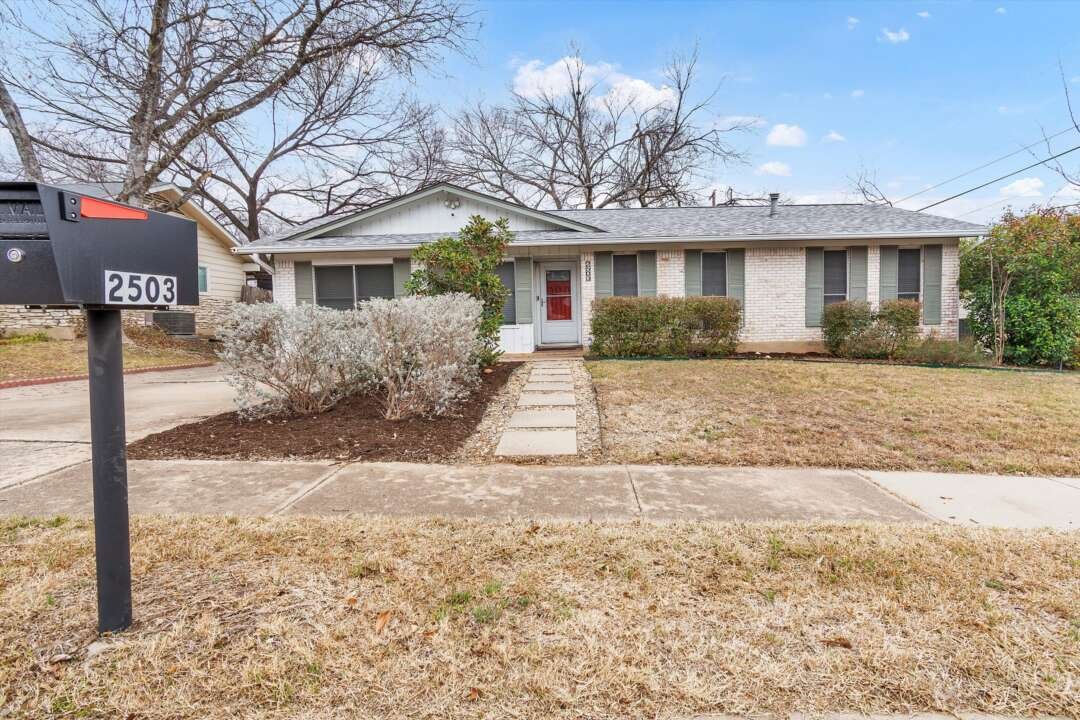
Well below Austin's median home price — an affordable entry point with room to invest in upgrades and build equity over time. Buy smart, underwrite it like a rental, and let it become a wealth-building asset as the neighborhood continues to grow.
Another opportunity to get into the Austin market at a price point that leaves financial breathing room. Buy below market, live comfortably, and invest the savings — or add value over time with a live-in improvement strategy.
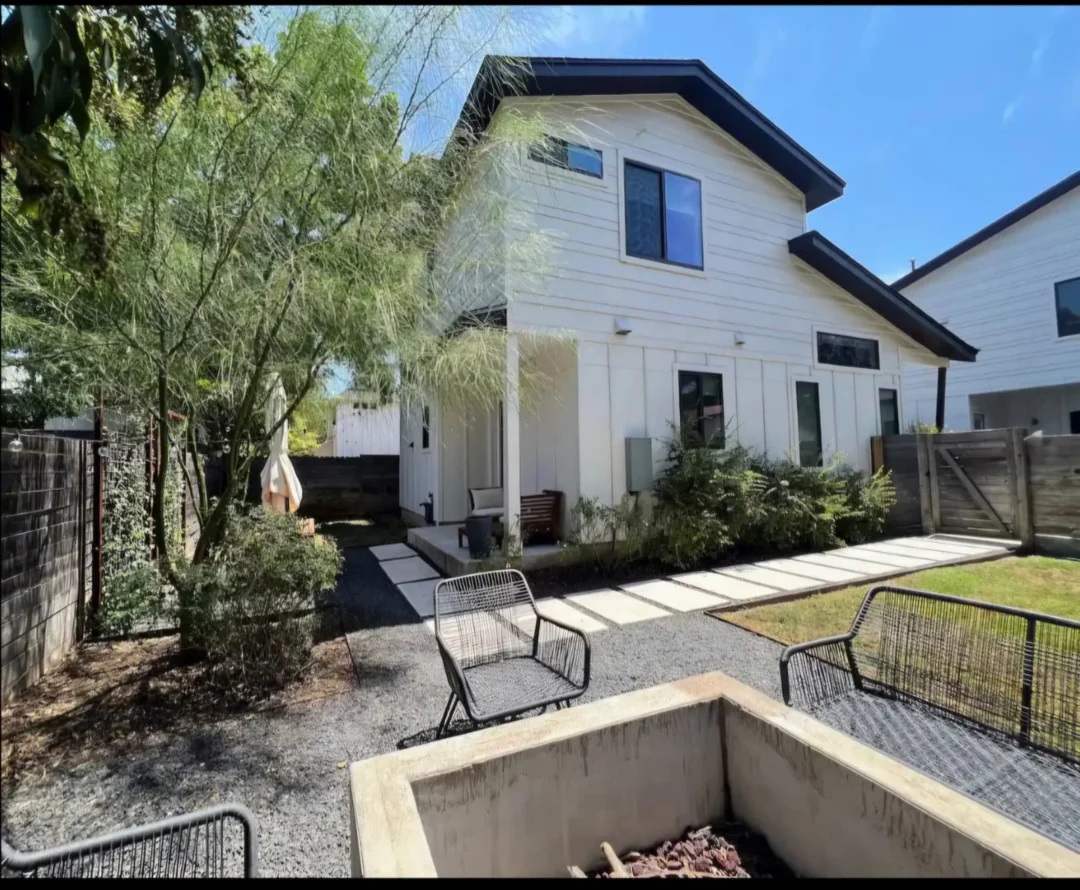
Located in one of Austin's most sought-after neighborhoods, this property is ready to live in immediately — or you can take over a thriving Airbnb operation that's already generating income. A great place to live that doubles as a working investment from day one.
A proven income producer with both long-term and short-term rental potential — plus an amazing place to call home. The backyard studio is perfect for remote workers or creatives, and the flexible setup means you can house hack it however fits your life: live in the main house and rent the studio, run it as an STR, secure a long-term tenant, or any combination.
With four bedrooms and three-and-a-half bathrooms, this home gives you serious room to spread out and make it your own. Live in it comfortably for years, and when you're ready for your next move, the generous layout makes it a strong candidate for either a long-term or short-term rental.