

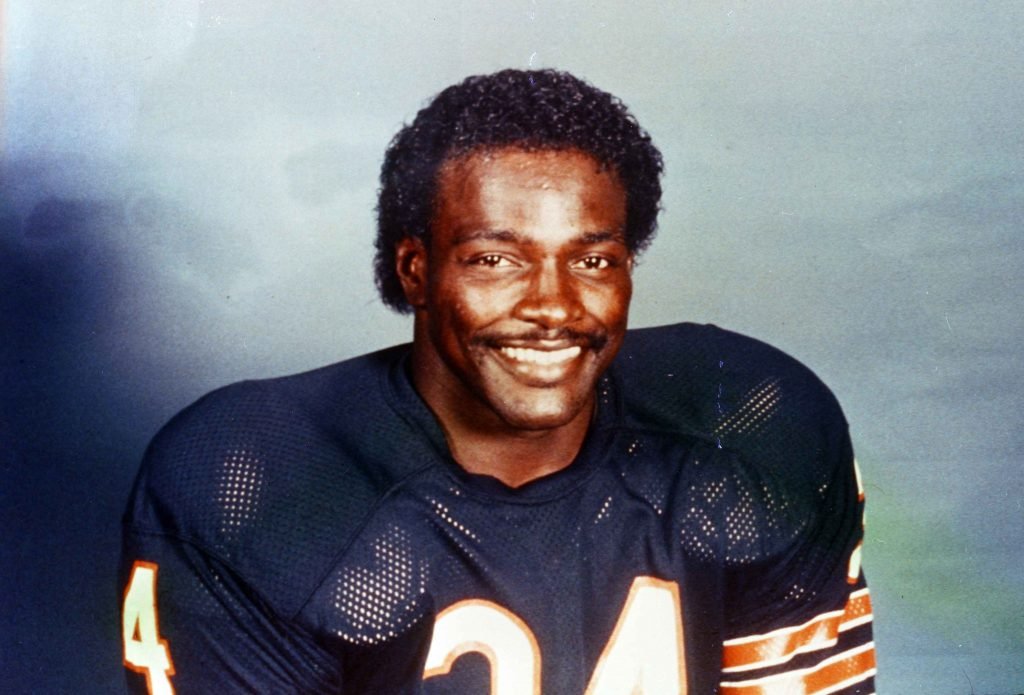
They called him "Sweetness"—not just for the way he ran, but for the way he lived. Walter Payton was the greatest running back of his era and, by the end of his life, something much more: a man who showed that true greatness is measured not by what you gain, but by what you give. For 13 seasons, he was the heart and soul of the Chicago Bears. For a lifetime, he was the standard for what an athlete—and a human being—could be.
Mississippi Roots
Walter Jerry Payton was born on July 25, 1954, in Columbia, Mississippi. He grew up in a segregated South, the son of a factory worker. He didn't play football until his junior year of high school—he had avoided the sport to not compete with his older brother, Eddie. But once he started, his talent was undeniable. He scored 65 touchdowns in his final two high school seasons.
He attended Jackson State University, where he became a consensus All-American and scored 464 points—an NCAA record at the time. The Chicago Bears selected him fourth overall in the 1975 NFL Draft. He would never leave.
"When you're good at something, you'll tell everyone. When you're great at something, they'll tell you."
— Walter PaytonThe Greatest Bear
From his first snap, Walter Payton played football like no one before him. He didn't just run around defenders—he ran through them, over them, and sometimes launched himself above them entirely. His high-stepping, stiff-arming, never-give-up style became legendary. He was as likely to throw a devastating block as he was to break a 60-yard run.
On November 20, 1977, he rushed for 275 yards in a single game against the Minnesota Vikings—a record that stood for 23 years. He did it with the flu, a 101-degree fever, and a shoulder so sore he could barely lift his arm.
On October 7, 1984, he broke Jim Brown's all-time rushing record on a rain-soaked field in Chicago. When the game stopped for a ceremony, Payton handed the ball to his offensive linemen. "They're the ones who deserve the credit," he said. He finished his career with 16,726 rushing yards—a record that stood for 18 years.
Super Bowl XX
The 1985 Chicago Bears were one of the greatest teams in NFL history, and Walter Payton was their leader. The team went 15-1 in the regular season and dominated their way to Super Bowl XX. The Bears won 46-10—but there was one heartbreak: Payton didn't score a touchdown. Coach Mike Ditka later called it the greatest regret of his coaching career.
Payton never complained. "Winning is the important thing," he said. It was quintessentially Sweetness—team first, always.
"I want to be remembered as the guy who gave his all whenever he was on the field."
— Walter PaytonNever Missed a Day
Perhaps the most remarkable statistic in Payton's career wasn't his yardage or his touchdowns—it was his durability. In 13 NFL seasons, he missed only one game—his first year, as a rookie. He played 186 consecutive games, taking punishment from the biggest, strongest athletes in the world, and he kept getting up. Every single time.
His offseason training was legendary. He ran hills in the Mississippi heat—a punishing sand hill near his hometown that became known as simply "The Hill." Other players who tried to keep up with him couldn't.
Achievements
- NFL All-Time Rushing Leader at retirement (16,726 yards)
- Super Bowl XX Champion (1985)
- NFL Most Valuable Player (1977)
- 9x Pro Bowl selection
- NFL Man of the Year (1977) — award later renamed in his honor
- Single-game rushing record: 275 yards (1977)
- Missed only 1 game in 13 seasons
- Pro Football Hall of Fame (1993)
- Jersey #34 retired by Chicago Bears
A Legacy of Sweetness
Walter Payton retired after the 1987 season. He became a successful businessman, restaurant owner, and philanthropist. He dreamed of owning an NFL franchise—he would have been the first Black majority owner.
In early 1999, Payton revealed he had a rare liver disease and needed a transplant. He used his platform to advocate for organ donation, asking Americans to sign their donor cards. On November 1, 1999, Walter Payton died at age 45. The entire city of Chicago mourned.
The NFL renamed its most prestigious off-field honor the Walter Payton NFL Man of the Year Award—given annually to the player who best combines on-field excellence with community service. It is the highest honor the league bestows, and it bears exactly the right name.
Sweetness. On the field and off, there was never anyone quite like him.