
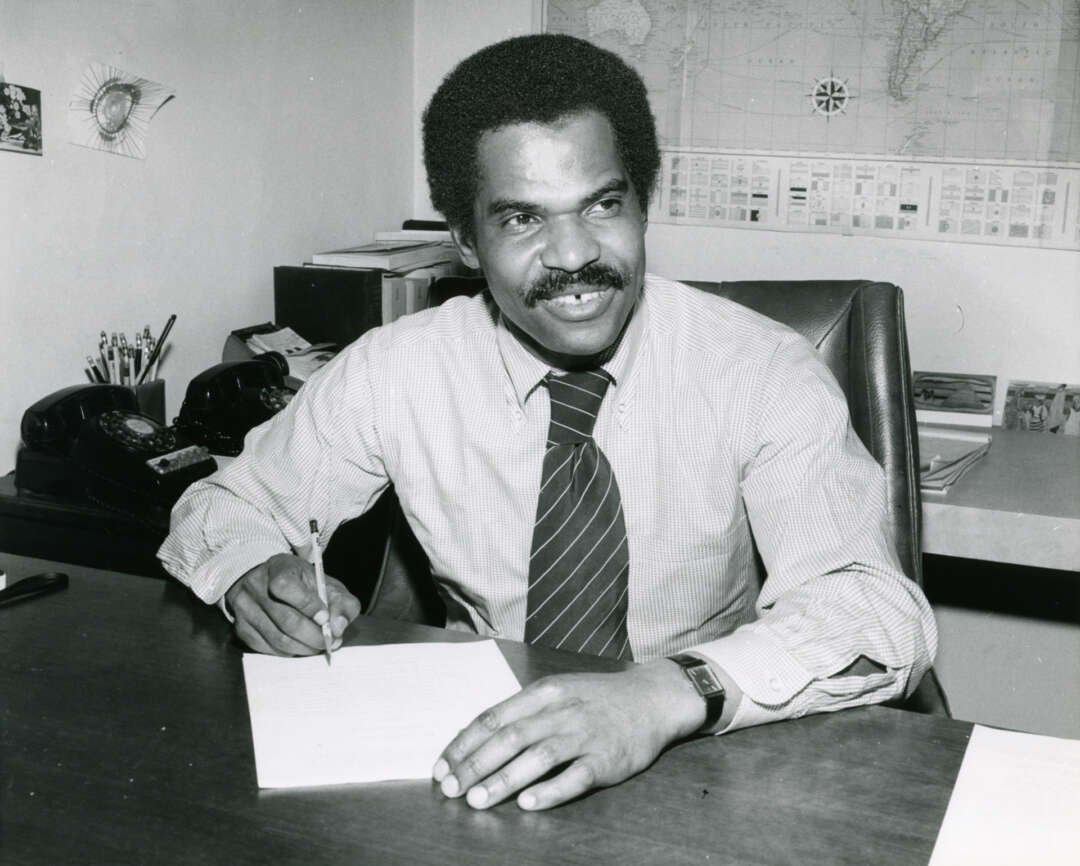
In 1987, a Black lawyer from Baltimore executed the largest leveraged buyout of international assets in American history. The price tag: $985 million. The target: Beatrice International Foods, a global conglomerate with operations in 31 countries. The man behind it all: Reginald F. Lewis.
He didn't inherit wealth. He didn't come from connections. He built an empire through intellect, discipline, and an absolute refusal to accept limits others tried to place on him. Reginald Lewis didn't break the glass ceiling. He bought the building.
$985M
Beatrice Acquisition
$1.8B
Annual Revenue
#1
Largest Black-Owned Business
Baltimore Beginnings
Reginald Francis Lewis was born on December 7, 1942, in Baltimore, Maryland. His parents divorced when he was young, and he was raised by his mother, grandparents, and a stepfather in a working-class neighborhood. There was no family money, no trust fund, no easy path forward.
But young Reg had something else: a ferocious work ethic and a mind like a steel trap. He was a star athlete—quarterback of his high school football team—and an excellent student. He learned early that discipline and preparation could take you places talent alone could not.
"Keep going, no matter what."
— Reginald F. Lewis
Harvard Law
Lewis attended Virginia State University on a football scholarship, graduating in 1965. Then he did something almost unheard of for a Black man in the mid-1960s: he was accepted to Harvard Law School—not through any affirmative action program, which didn't exist yet, but on the strength of his record alone.
At Harvard, Lewis encountered a world of privilege and pedigree that could have intimidated him. It didn't. He competed fiercely, graduated in 1968, and emerged with both a law degree and a clear-eyed understanding of how power worked in America. If he was going to change things, he needed to master the rules first—then use them to his advantage.
Building TLC
After working at top New York law firms—becoming one of the first Black partners at a major Wall Street firm—Lewis decided he wanted to own things, not just advise owners. In 1983, he founded TLC Group, L.P., a venture capital firm focused on leveraged buyouts.
His first major deal came in 1984: the acquisition of McCall Pattern Company, a struggling sewing pattern business, for $22.5 million. Lewis turned the company around, modernizing operations and expanding internationally. Three years later, he sold McCall for $65 million—a return of nearly three to one.
It was a proof of concept. Reginald Lewis knew how to find undervalued companies, fix them, and create enormous value. Now he was ready for the big leagues.
The Beatrice Deal
In 1987, Beatrice Companies put its international food division up for sale. It was massive: 64 companies operating in 31 countries, producing everything from ice cream to orange juice to potato chips. The business had $1.8 billion in annual revenue.
Lewis saw an opportunity everyone else had missed. He assembled a financing package of nearly $1 billion—debt and equity from some of the most prestigious banks and investment firms in the world—and closed the deal for $985 million. It was the largest offshore leveraged buyout in history.
Beatrice International Foods became TLC Beatrice International Holdings, Inc.—and overnight, it became the largest Black-owned business in America. Lewis was the chairman and CEO of a global empire.
"Why should White guys have all the fun?"
— Reginald F. Lewis (title of his autobiography)
Running the Empire
Lewis didn't just buy Beatrice—he improved it. He streamlined operations, sold underperforming units, and focused on the most profitable businesses. Within a few years, TLC Beatrice was generating hundreds of millions in profits.
He ran the company from offices in New York and Paris, living a lifestyle that reflected his success: homes in Manhattan and Paris, a world-class art collection, philanthropic contributions to Howard University and Harvard Law School. He was living proof that a Black man could compete—and win—at the highest levels of global finance.
Gone Too Soon
On January 19, 1993, Reginald F. Lewis died of brain cancer. He was just 50 years old.
His death came at the height of his powers. TLC Beatrice was thriving. His influence was growing. He had been planning new acquisitions, new ventures, new ways to build Black wealth and power. All of it ended too soon.
But what he left behind was more than a fortune. Lewis donated $3 million to Harvard Law School—the largest gift from an individual in the school's history at that time. The library there now bears his name. He gave generously to Howard University, the NAACP, and countless other causes.
Legacy
Reginald F. Lewis proved that the highest echelons of American business were not off-limits—not to a Black man from Baltimore, not to anyone with the talent and determination to compete. He didn't ask for permission. He didn't wait for inclusion. He bought his seat at the table.
His autobiography, Why Should White Guys Have All the Fun?, published posthumously, became a bestseller and an inspiration to a generation of Black entrepreneurs. His life story is taught at business schools. His name is on buildings.
But perhaps his greatest legacy is the question he asked with his entire life: Why not? Why shouldn't a Black man run a billion-dollar global company? Why shouldn't he live in Paris, collect art, shape the economy? Why should anyone accept limits that exist only in other people's imaginations?
Reginald F. Lewis didn't accept those limits. Neither should anyone else.
← Back to Black History Highlights