

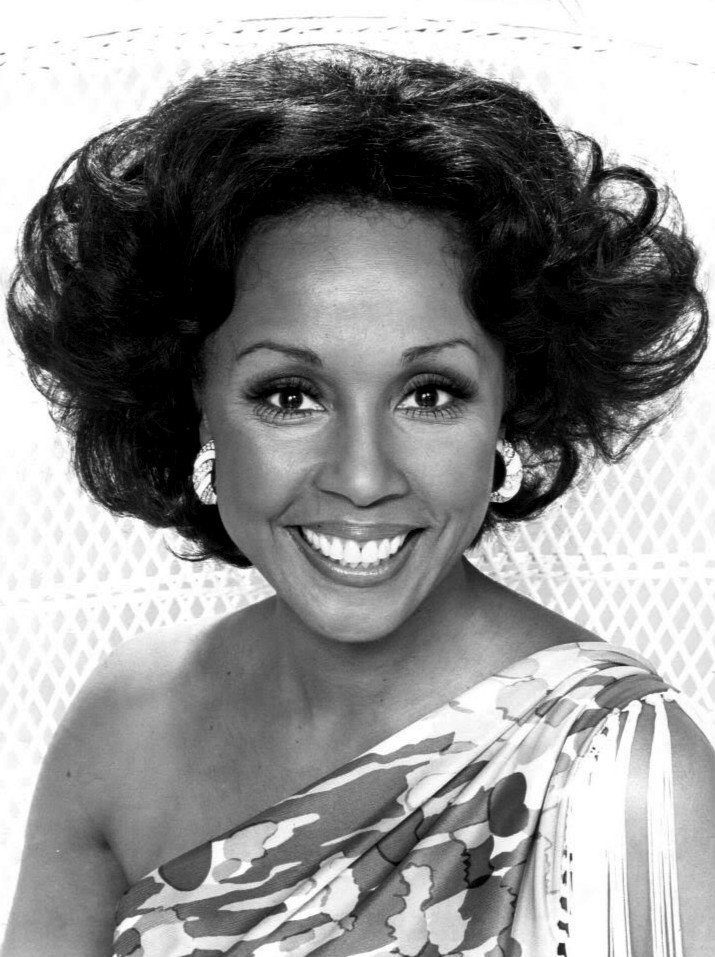
Diahann Carroll didn't just break the mold—she proved it never should have existed. In an era when Hollywood offered Black women only two roles—the maid or the mammy—she became a leading lady on her own terms. She was the first Black woman to star in her own television series in a non-stereotypical role, the first Black woman to win a Tony Award for Best Actress, and for six decades, a standard of elegance, talent, and determination that redefined what was possible.
A Star Is Born in the Bronx
Carol Diann Johnson was born in the Bronx on July 17, 1935, to working-class parents who believed in the power of culture. Her mother enrolled her in singing and dance classes, and by age ten, she had won a scholarship to the High School of Music & Art. She was modeling for Ebony magazine as a teenager and won a talent competition on the television show Chance of a Lifetime at just 18.
She reinvented herself as Diahann Carroll and quickly caught the attention of Broadway and Hollywood. Her beauty was striking—but it was her voice and her presence that made her unforgettable.
"I'm not going to let someone else's idea of who I should be determine my future."
— Diahann CarrollBroadway and Hollywood
In 1954, Carroll made her Broadway debut in House of Flowers alongside Pearl Bailey. Eight years later, she made history, winning the Tony Award for Best Actress in a Musical for No Strings—the first Black woman to do so. The Richard Rodgers musical was revolutionary: Carroll played a sophisticated fashion model in Paris, and her character's interracial romance was depicted without commentary or controversy.
In film, she earned an Academy Award nomination for Best Actress for Claudine (1974), playing a single mother on welfare with warmth, humor, and dignity. It was one of the first films to portray the real lives of working-class Black families with honesty rather than stereotype.
Julia — A Television Revolution
In 1968, Diahann Carroll changed television history. Julia premiered on NBC, making Carroll the first Black woman to star in her own network television series in a non-stereotypical role. She played Julia Baker, a nurse and single mother—a professional, intelligent, beautiful woman who happened to be Black.
The show was groundbreaking and controversial. Some critics said it didn't address the realities of race in America. Others said it was revolutionary simply for showing a Black woman living a normal, dignified life on primetime television. Carroll navigated the debate with grace: "I knew that I was breaking ground. I didn't expect everyone to understand it immediately."
The show ran for three seasons and earned Carroll a Golden Globe Award for Best Actress in a Television Series. More importantly, it opened the door for every Black actress who followed.
"I've always been told it couldn't be done. Then I go and do it."
— Diahann CarrollDominique Deveraux
In the 1980s, Carroll reinvented herself again, joining the cast of the hit prime-time soap opera Dynasty as Dominique Deveraux—a glamorous, wealthy, scheming socialite who could go toe-to-toe with Joan Collins's Alexis Carrington. It was the first major role for a Black actress on a prime-time soap opera, and Carroll played it with delicious relish.
"Dominique walked into that mansion like she owned it," Carroll said. "And in many ways, she did." The role proved that a Black woman could command the screen in a genre that had been exclusively white.
Achievements
- First Black woman to star in her own TV series in a non-stereotypical role (Julia, 1968)
- First Black woman to win Tony Award for Best Actress in a Musical (No Strings, 1962)
- Academy Award nomination for Best Actress (Claudine, 1974)
- Golden Globe Award for Best Actress in a TV Series (Julia, 1969)
- First major Black actress on a prime-time soap opera (Dynasty, 1984)
- NAACP Image Award recipient
- Star on the Hollywood Walk of Fame
- Six-decade career spanning stage, film, television, and music
A Legacy of Elegance
Diahann Carroll continued performing well into her later years, appearing in Grey's Anatomy, White Collar, and the film Peeples. She was diagnosed with breast cancer in 1997 and became an outspoken advocate for cancer awareness and early detection.
She died on October 4, 2019, at age 84. The tributes were unanimous: she was a pioneer, a barrier-breaker, and an icon of grace.
"Diahann Carroll walked this earth for 84 years and never stopped being a first," her daughter, Suzanne Kay, said. She was the first on television, the first on Broadway, and the first in the hearts of millions who saw in her something they had never been allowed to see before: a Black woman, center stage, magnificent and unapologetic.