

Two Kinds of Repair Conversations — Only One Is Optional
During the option period, repair requests are largely a matter of choice. The buyer can ask for anything. The seller can agree, counter, or decline. If the two sides can't reach agreement, the buyer retains the unrestricted right to terminate the contract during that period — but the option fee paid to the seller is non-refundable. The earnest money, however, is returned to the buyer if they terminate within the option period. It's a negotiation, and both parties have broad discretion over how it plays out.
When a lender determines that a property does not meet their underwriting standards, they are telling the buyer that the loan will not fund unless specific repairs are completed. The appraiser or underwriter identified conditions that fall short of the lender's requirements, and now both parties must respond — within a defined contractual framework that has real consequences.
What Triggers a Lender-Required Repair
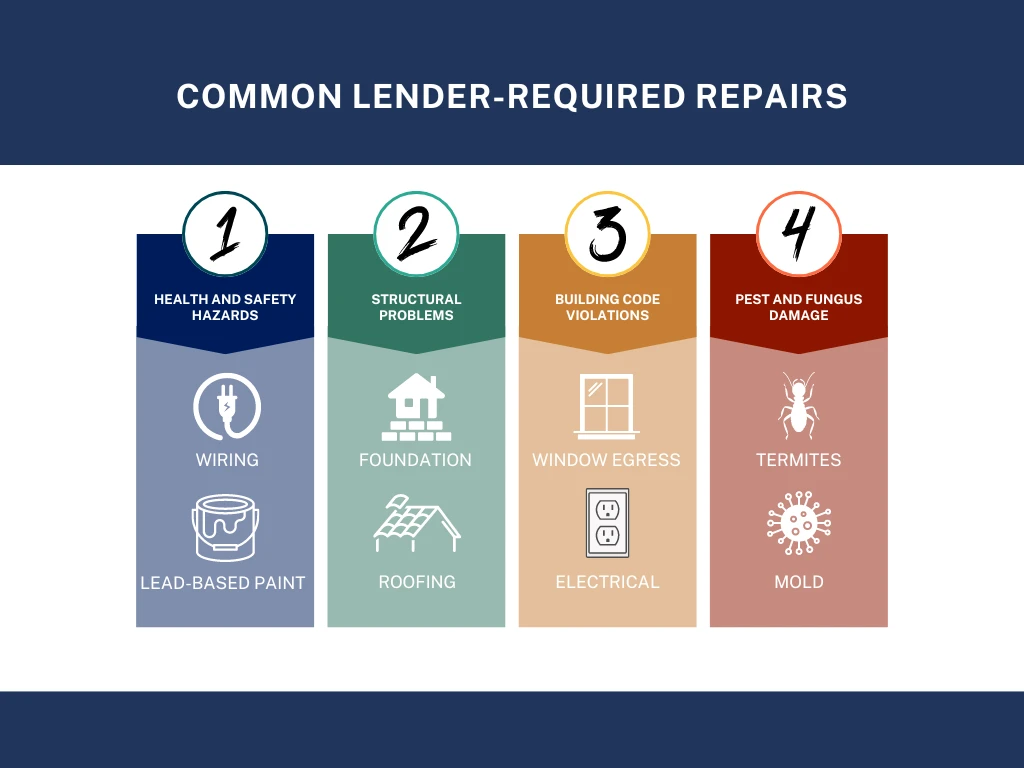
Lenders evaluate properties, not just borrowers. Before approving a loan, the lender must determine that the home meets minimum property standards for their loan program. Common triggers include:
- Structural issues — foundation concerns, roof condition, load-bearing deficiencies
- Water intrusion — active leaks, moisture damage, drainage problems
- Health and safety hazards — environmental conditions, ventilation issues, certain remediation requirements
- Electrical or plumbing deficiencies — code violations, outdated systems flagged by the appraiser
- Loan program thresholds — FHA and VA loans carry more stringent property condition requirements than conventional financing
The bar varies by loan type, but the principle is the same across the board. If the property doesn't meet the standard, the loan doesn't close until it does.
Source: House Buyers of America
The Texas Contractual Framework
Under the standard Texas One to Four Family Residential Contract, neither party is automatically obligated to pay for lender-required repairs. What the contract provides is a clear process for resolving them. The TREC Amendment — Form 39-10 — is the formal vehicle. It allows the parties to itemize the required repairs, document the agreed scope of work, and specify who pays what. You can download the current version of the form directly here: TREC Amendment to Contract (Form 39-10). Once executed, it satisfies the lender's requirement and keeps the transaction on track.
There is genuine flexibility in how the cost is structured — but there is no flexibility in whether the repairs happen. The lender has made that determination, and it stands.
— Adam Timothy GroupThat negotiation can go any number of ways. The seller can agree to cover the cost in full. The buyer can absorb some or all of it. The sales price can be adjusted. In some cases, a qualified contractor willing to be paid at closing can relieve the pressure on a seller without upfront liquidity.
What Happens If the Parties Can't Agree
This is where lender-required repairs diverge sharply from option period negotiations. If the buyer and seller cannot reach agreement on how to handle the repairs, the buyer is not simply free to walk away on their own terms.
The Third Party Financing Addendum governs this situation. If the lender formally determines that the property does not satisfy their underwriting requirements — and the parties have not resolved the issue — the buyer may terminate the contract no later than three days before the closing date, providing the seller with written notice and a copy of the lender's written determination. If those conditions are met, the earnest money is refunded to the buyer.
A Word to Buyers
Lender-required repairs can feel like a disruption, but they exist to protect you. Your lender is confirming that the home meets a minimum standard before committing significant capital. You now have documented leverage and a defined legal process. Use both carefully and in good faith — the goal is to get to closing on a home that is safe, sound, and financeable.
A Word to Sellers
No resale home is perfect, and no reasonable buyer expects one to be. If lender-required repairs surface in your transaction, understand that resisting them doesn't make them go away. A buyer with financing faces the same lender requirements on the next offer. If this transaction falls apart, you return to market with a known, disclosed condition — and the same conversation waiting for you.
Sellers who treat lender-required repairs as a solvable problem almost always find a path forward. Those who resist often find themselves back on the market, having the same conversation with the next buyer in line.
The Bottom Line
Option period repair negotiations are a conversation. Lender-required repairs are a contractual obligation with defined rules, defined timelines, and defined consequences. Knowing the difference — and working within the right framework — is what gets deals closed.
Navigating a Complex Transaction in Austin?
Whether you're a buyer facing an unexpected repair requirement or a seller trying to keep a deal together — we're here to help you understand your rights and find a path forward.
Connect With Us