
Neighborhood Guides
Montopolis Austin
The Southeast Austin neighborhood older than the city itself — deep community roots, genuine history, and some of the last real value inside the Austin loop.
Homes, History & East Austin Value
A neighborhood whose name predates Austin, whose community predates annexation, and whose character predates every trend that's reshaping the city around it.
Montopolis Austin is one of the oldest continuously inhabited places in the Austin metro — older than Austin itself. Long before the city of Austin was selected as the Republic of Texas's capital in 1839, the Montopolis river crossing had served Indigenous trade routes, Spanish travelers along El Camino Real de los Tejas, and early Texas settlers. The name "Montopolis" itself comes from the Republic of Texas era — Latin "mont" for mountain and Greek "polis" for city — attached to a townsite platted in 1839 by Jesse Tannehill that briefly competed with Waterloo (later renamed Austin) for consideration as the Republic's capital.
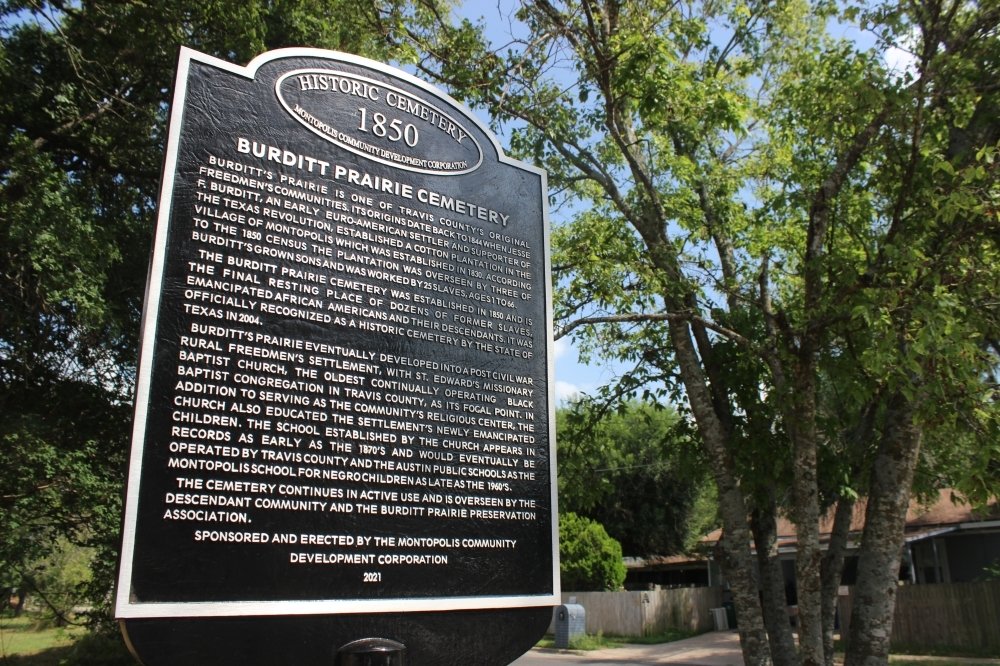
Today's Montopolis neighborhood sits south of the Colorado River in Southeast Austin, and its deep community roots trace directly to Texas Reconstruction. After the Civil War, the area south of the Colorado became a freedmen's community — one of 15 such communities outside Austin in the 1860s — where formerly enslaved people from the nearby Burditt Plantation were deeded land by former enslaver Jesse Burditt for a burial ground. The Burditt Prairie Cemetery, still a working cemetery today and a designated Texas historic site, remains one of Austin's oldest African American cemeteries and a physical link to the Montopolis community's freedmen heritage.
Montopolis Austin at a Glance
A snapshot of what defines the Montopolis neighborhood — size, structure, and why it sits among the most historically significant neighborhoods of Austin.
Where Montopolis Austin Sits Among the Neighborhoods of Austin
Montopolis Austin occupies a large footprint in the 78741 ZIP code in Southeast Austin, bounded by Lady Bird Lake to the north, Grove Street and the Pleasant Valley neighborhood to the west, Texas State Highway 71 to the south, and U.S. Route 183 to the east. The southeast corner of the Montopolis neighborhood abuts Austin-Bergstrom International Airport — making Montopolis one of the closest residential neighborhoods to the airport in the entire Austin metro.
Among the neighborhoods of Austin, Montopolis is roughly 10 minutes from Downtown Austin, 5–7 minutes from Austin-Bergstrom International Airport, minutes from East Riverside, and within easy reach of East Austin's restaurant corridor. Montopolis sits in Austin City Council District 3. The Montopolis neighborhood has clearly defined historic boundaries — one of the reasons Montopolis Austin has retained such a strong sense of community continuity through rapid city change. For geographic context on the neighborhoods of Austin, the Wikipedia list of Austin neighborhoods offers a full directory, and our complete guide to Austin neighborhoods compares Montopolis to the rest of the city.
Map of the Montopolis Neighborhood
The History of Montopolis: From Republic of Texas to Today
No neighborhood guide in the Austin area can honestly discuss Montopolis without discussing its history. The Montopolis neighborhood's story is one of the most layered of any Austin neighborhood — Indigenous routes, Republic of Texas ambition, Reconstruction-era freedmen's community, early 20th-century Mexican immigration, Jim Crow-era segregation, mid-century annexation, and ongoing 21st-century change. All of it is still visible in Montopolis today.
The Original Montopolis Townsite (1838–1841)
The first Montopolis was not today's Montopolis. The original Montopolis townsite was platted in 1838 by Jesse Cornelius Tannehill on the north bank of the Colorado River, east of what would become Austin. Tannehill filed a formal partnership deed on July 2, 1839, establishing a platted town with residential lots, farm lots, streets, and provisions for schools and public buildings. Evidence suggests Montopolis was in the running to become the capital of the Republic of Texas, but the site selection commissioners chose Waterloo — which was renamed Austin. By 1841, the Montopolis partnership had dissolved and the original townsite faded. But the Montopolis name lived on — attached to the nearby river crossing that had served traders and travelers since long before either Montopolis or Austin existed.
Burditt Prairie: Freedmen's Community (Post-1865)
The Montopolis neighborhood Austinites recognize today took shape south of the Colorado River during and after Texas Reconstruction. After the Civil War, settler Jesse Burditt — who had operated a cotton plantation using enslaved labor — deeded a portion of his land to formerly enslaved people for use as a freedmen's burial ground and community. What emerged south of the Colorado became known as Burditt Prairie, and it was one of 15 freedmen's communities outside Austin during Reconstruction. The Burditt Prairie Cemetery, still a working cemetery on Felix Avenue just east of Montopolis Drive, is one of Austin's oldest African American cemeteries. More than 90% of those buried there are lineal descendants of the Burditt enslaved population. The cemetery received a historical marker in 2021 — organized by neighborhood historian Dr. Fred McGhee and the Montopolis Community Development Corporation — and remains a Texas-designated historic cemetery.
Mexican Montopolis & San Jose Cemetery (1919 onward)
In the early 20th century, Montopolis saw a large influx of Mexican immigrants, and the neighborhood's second defining community identity took root. Between 1919 and 1922, San Jose Cemetery (Cementerio San José) was established on the 700 block of Montopolis Drive as a Mexican and Mexican American burial ground — created because Mexican Austinites were excluded from many Austin cemeteries. San Jose Cemetery is a designated Texas historic cemetery and continues to be maintained by residents and the San Jose-Montopolis Cemetery Association. The Mexican American community that grew around San Jose Cemetery and along Montopolis Drive became — and remains — one of the defining communities of the Montopolis neighborhood.
The Montopolis Negro School (1935–1962)
From 1935 until 1962, the Montopolis neighborhood was home to a Jim Crow-era rural school serving African American students. The original Colorado School District school number 34, founded around 1891, was destroyed in a storm in 1935 and rebuilt in Montopolis on land donated by St. Edward's Baptist Church, using a repurposed army barrack from Camp Swift. The school became part of Austin ISD in 1952 and closed in 1962 as part of Austin's desegregation. It is one of the last surviving Jim Crow-era rural schools in Travis County. The City of Austin acquired the building in 2019 and has been planning its preservation and community use. The Montopolis Negro School remains a physical link to a specific chapter of Austin history that most Austin neighborhoods don't preserve.
Annexation & Modern Montopolis (1951 onward)
Most of the Montopolis community was annexed by the City of Austin in 1951, with additional portions absorbed in the 1960s and 1970s. Before annexation, Montopolis had been its own community with its own identity, and that independence left a distinctive mark on the street grid, building stock, and community institutions. Annexation brought Montopolis into the broader Austin neighborhoods landscape, but the Montopolis community's depth of multigenerational continuity — families whose roots trace to the freedmen's community, to the Mexican American community around San Jose Cemetery, or to the mid-century working-class population — has persisted through decades of city change.
21st-Century Montopolis
Contemporary Montopolis sits at a crossroads. The neighborhood has changed significantly over the past fifteen years — new construction, rising property values, new businesses along Montopolis Drive, and demographic shifts that mirror broader East Austin dynamics. Gentrification pressures are real in Montopolis, with long-time homeowners facing property tax burdens that have doubled or tripled since the mid-2000s. The Montopolis Community Development Corporation and other community groups actively work to preserve the neighborhood's historic identity through projects like the Burditt Prairie Cemetery restoration and advocacy around the Montopolis Negro School. For buyers considering Montopolis homes for sale, understanding this history isn't just context — it's part of what makes the Montopolis neighborhood irreplaceable in the Austin landscape.
Top 3 Things to Love About the Montopolis Austin Neighborhood
If you're evaluating Montopolis Austin against other East Austin neighborhoods, three specific things make the Montopolis neighborhood stand out:
Historical Depth You Can't Manufacture
Few Austin neighborhoods have Montopolis's layered history. From Burditt Prairie Cemetery to San Jose Cemetery to the Montopolis Negro School, the Montopolis neighborhood preserves chapters of Austin history that newer neighborhoods simply can't replicate.
Value Near Downtown & the Airport
Montopolis Austin remains one of the last inner-loop neighborhoods where genuine entry-level home prices still exist. With downtown 10 minutes away and the airport 5 minutes away, the Montopolis value proposition is hard to match elsewhere in East Austin.
Multigenerational Community Roots
Montopolis families have been here for generations. Churches, cultural institutions, community centers, and the San Jose-Montopolis Cemetery Association anchor a community sense of place that most Austin neighborhoods simply don't have.
What Makes the Montopolis Neighborhood Different
Among the neighborhoods of Austin, Montopolis stands apart for its genuine historical depth, its community continuity, and a housing stock that still offers meaningful value within the Austin city limits.
Montopolis Austin Architecture
Montopolis homes are predominantly mid-century and earlier — ranch-style homes, small wood-frame cottages, shotgun houses tied to the freedmen's community era, and older homes on larger lots than you'll find in many East Austin neighborhoods. The Montopolis neighborhood also includes scattered newer builds, renovation projects, and a growing number of modern infill homes. Lots in Montopolis Austin are often generously sized — a feature that's increasingly rare this close to downtown. Churches, community buildings, and the historic cemeteries throughout Montopolis reflect the neighborhood's long history.
Montopolis Housing Mix
The Montopolis Austin housing market is one of the most diverse in the inner Austin loop. Original single-family Montopolis homes sit alongside renovated properties, new-build modern infill, manufactured housing communities, and a meaningful share of older multifamily. This mix keeps Montopolis pricing accessible and creates opportunities for buyers at multiple budget points — something inner East Austin can no longer offer.
Who Lives in Montopolis Austin
Montopolis attracts a mix that reflects the neighborhood's layered roots. Multigenerational Latino and Black Montopolis families with community ties spanning three or four generations remain a core demographic. Working Austin households drawn by Montopolis value and location share the neighborhood alongside an increasing number of younger buyers priced out of inner East Austin. The Montopolis community has genuine continuity — walking through Montopolis feels different from walking through neighborhoods built or rebuilt in the last decade. For comparison, buyers seeking newer master-planned homes often look at Easton Park or Mueller Austin instead.
Homes in Montopolis: The East Austin Real Estate Market
Homes in Montopolis Austin and Montopolis homes for sale represent some of the best genuine value available in the inner Austin loop. If you're searching for homes in Montopolis or tracking the Montopolis neighborhood market, here's what it actually offers.
Montopolis Austin Housing Stock
- Single-family ranch homes in Montopolis — 1,000 to 1,800 sq ft mid-century homes on larger-than-inner-East-Austin lots. The signature Montopolis neighborhood home type.
- Older cottages and shotgun houses — Montopolis has genuinely historic housing stock tied to the freedmen's community and early 20th-century neighborhoods, often in need of renovation but priced accordingly.
- Renovated Montopolis homes — a growing subset of updated properties that preserve Montopolis neighborhood character while offering modern livability.
- New-build modern homes — contemporary infill construction appearing throughout Montopolis on formerly subdivided lots.
- Larger lots — Montopolis Austin frequently offers lot sizes that are simply unavailable in inner East Austin neighborhoods at similar price points.
- Manufactured housing communities — Montopolis includes meaningful manufactured and mobile home communities, part of the neighborhood's housing diversity.
The Montopolis Austin Real Estate Market
Montopolis real estate is one of the best value stories in inner Austin. The Montopolis market has appreciated as buyers have pushed outward from inner East Austin, but Montopolis homes still trade at meaningful discounts to comparable-proximity properties. For buyers on a budget who need proximity to downtown or the airport, Montopolis Austin remains the move. Curious what Montopolis-area homes we've actually sold? Browse our recent transactions to see real examples from the Montopolis market and surrounding East Austin neighborhoods. For current Montopolis homes for sale, see our active Austin listings.
See Homes We've Sold in Montopolis & East Austin
Want a real sense of what Montopolis Austin homes trade for and what we've actually closed? Our recent transactions page shows real homes we've helped buyers and sellers with across Montopolis and the surrounding East Austin neighborhoods.
View Our Recent TransactionsFactors to Consider When Buying in Montopolis Austin
Buying a home in Montopolis is different from buying in most Austin neighborhoods. The historical layering, flood considerations, proximity to the airport, and ongoing neighborhood change all create considerations specific to the Montopolis submarket.
Property Age & Condition
Many Montopolis homes are mid-century or older. Foundation conditions, electrical systems, plumbing, and potential lead paint or asbestos concerns are all common considerations on Montopolis properties. Pier-and-beam foundations typical of older Montopolis homes can shift on Central Texas's expansive clay soils. Budget for thorough inspections and potential remediation costs on any historic Montopolis home.
Flood Risk
Portions of Montopolis sit within FEMA flood zones, particularly near the Colorado River and Country Club Creek. Verify flood zone designations for any specific Montopolis address under consideration and budget for flood insurance accordingly. Even properties outside designated high-risk zones can flood — standard homeowners policies exclude flood damage, and Montopolis's topography includes drainage patterns worth understanding.
Airport Flight Paths & Noise
Montopolis's proximity to Austin-Bergstrom International Airport is a real advantage for travelers — but the airport's flight paths affect eastern portions of the Montopolis neighborhood. Visit prospective Montopolis homes at multiple times and days to gauge actual aircraft noise levels. Some Montopolis addresses experience significant overhead traffic; others are largely unaffected.
Zoning & Future Development
Montopolis is undergoing real change. Adjacent lots could become new construction or multifamily under Austin's recent zoning reforms, including the HOME (Home Options for Mobility and Equity) initiative. Review current zoning designations and any pending development applications for nearby parcels before buying a Montopolis home.
Neighborhood Transition
Montopolis is in active transition. Blocks can vary significantly in character — established multigenerational community, older unrenovated housing, new infill construction, and manufactured housing often share geographic proximity. Understand the specific block you're considering, not just the Montopolis neighborhood name.
Food, Drink & Things to Do in Montopolis Austin
Montopolis's food and drink scene reflects the neighborhood's long-standing Latino and working-class roots. Family-run Mexican restaurants, longtime neighborhood taquerias, and an expanding selection of newer spots along the Montopolis corridors define the local food culture.
Where to Eat in Montopolis
- Ani's Day & Night — a coffee shop and bar located in a longtime Montopolis family's childhood home, named after the owner's mother. A Montopolis cultural anchor.
- JD's Grocery — a supermarket attached to a gas station serving pan dulce, pastries, and burritos. Pure Montopolis neighborhood institution.
- El Tacorrido — longtime Montopolis taqueria beloved by Montopolis neighborhood regulars.
- Las Cazuelas — family Mexican restaurant in Montopolis Austin with a multigenerational following.
- Longhorn Po-Boys — neighborhood po-boy and seafood shop on the edge of Montopolis.
- Distant Relatives — in adjacent Govalle, a short drive from Montopolis.
- Suerte, Nixta Taqueria, La Barbecue — inner East Austin restaurants, 10 minutes from Montopolis.
Where to Drink Near Montopolis Austin
- Meanwhile Brewing — large brewery with expansive patio near Montopolis, a short drive from most Montopolis addresses.
- Central Machine Works — brewery in adjacent Govalle, 5 minutes from Montopolis.
- Sagebrush — honky-tonk and live music venue south of Montopolis off South Congress.
- East Cesar Chavez and Holly bars — Nickel City, Lustre Pearl East, and the inner East Austin bar corridor are 10 minutes from Montopolis Austin.
What to Do in Montopolis Austin
Life in Montopolis centers on community institutions and proximity to some of Austin's best parks. The Montopolis Recreation and Community Center anchors neighborhood programming and events. Roy G. Guerrero Colorado River Metropolitan Park, one of Austin's largest district parks, borders Montopolis and offers trails, sports facilities, disc golf, and Colorado River frontage. Historic sites including Burditt Prairie Cemetery and San Jose Cemetery are part of the Montopolis cultural landscape and worth respectful visits. For broader Austin entertainment context beyond Montopolis, the official Austin entertainment districts guide from Visit Austin covers citywide activity.
Parks, Trails & Outdoor Life in Montopolis
Montopolis Austin has genuinely strong park infrastructure, anchored by one of the largest district parks in the city and proximity to the Colorado River.
- Roy G. Guerrero Colorado River Metropolitan Park — borders Montopolis and offers the largest open-space resource in this part of Austin, with trails, sports fields, disc golf, and Colorado River access.
- Montopolis Recreation & Community Center — neighborhood recreation facility inside Montopolis Austin with programming, pool, and community space.
- Colorado River frontage — Montopolis has some of the longest river access of any Austin neighborhood, along the neighborhood's northern edge.
- Country Club Creek Greenbelt — trail network connecting portions of Montopolis to broader East Austin green space.
- Nearby Lady Bird Lake Hike & Bike Trail — accessible from Montopolis via Roy G. Guerrero Park and the broader trail network.
Few East Austin neighborhoods offer Montopolis's combination of large district park, river frontage, and connected trail network — and most Montopolis residents haven't fully realized how strong the neighborhood's outdoor infrastructure actually is.
Schools Serving Montopolis Austin
The Montopolis neighborhood falls within the Austin Independent School District (AISD). Montopolis Austin students are generally assigned to:
- Allison Elementary or Linder Elementary — the Montopolis-area assigned elementary schools, with specific assignments varying by Montopolis address.
- Martin Middle School — serves much of the Montopolis neighborhood.
- Eastside Early College High School or Travis Early College High School — Montopolis Austin high school assignments vary.
- IDEA Montopolis — charter school campus located within the Montopolis neighborhood itself.
- Liberal Arts and Science Academy (LASA) — AISD's top academic magnet, open to Montopolis students by application.
Charter and private options are particularly active in Montopolis Austin, with IDEA Public Schools and KIPP Austin both operating campuses that serve Montopolis families. Always verify current school assignments with AISD directly for your specific Montopolis address.
Getting Around Montopolis Austin
Montopolis's location is one of its most underrated features — the Montopolis neighborhood is one of the best-connected inner-loop neighborhoods of Austin. From central Montopolis:
- Downtown Austin from Montopolis: ~10 minutes by car via East Riverside or 183.
- Austin-Bergstrom International Airport: ~5–7 minutes from Montopolis Austin — one of the closest neighborhoods to the airport.
- University of Texas from Montopolis: ~12 minutes by car.
- East Riverside from Montopolis: ~5 minutes.
- East Cesar Chavez and Holly from Montopolis Austin: ~10 minutes.
- Govalle from Montopolis: ~7 minutes.
- Easton Park from Montopolis: ~12 minutes.
CapMetro bus service runs along the major Montopolis corridors, and the neighborhood's bike infrastructure is improving as Austin expands protected bike networks. Highway access from Montopolis is strong, with US-183 on the eastern edge and East Riverside Drive connecting Montopolis directly to downtown and the airport.
Most Coveted Streets in Montopolis Austin
Within the Montopolis Austin neighborhood, certain streets and sub-areas command premium buyer interest based on specific combinations of proximity, lot quality, and neighborhood trajectory. Here's where experienced Montopolis buyers focus.
Montopolis Drive Corridor
Homes near Montopolis Drive — the neighborhood's namesake thoroughfare — benefit from proximity to Ani's Day & Night, JD's, and other community anchors. The corridor has seen meaningful revitalization while retaining neighborhood character. Homes within walking distance of the Montopolis Drive business cluster command premiums within the Montopolis market.
Roy G. Guerrero Park Adjacent
Montopolis blocks bordering or near Roy G. Guerrero Colorado River Metropolitan Park offer direct access to the largest park resource in southeastern Austin. Trail access, sports fields, disc golf, and Colorado River frontage are all steps from these Montopolis addresses. Park-adjacent Montopolis properties consistently perform well in the market.
Western Montopolis (Near Pleasant Valley)
The western edge of Montopolis, adjacent to Pleasant Valley and closer to East Riverside's redevelopment, offers relative proximity to inner East Austin amenities while maintaining Montopolis character and pricing. Buyers seeking Montopolis value with shorter commutes to inner East Austin often focus here.
Historic Burditt Prairie Area
The blocks near Burditt Prairie Cemetery and the original freedmen's community area hold particular historical significance within Montopolis. Properties here connect directly to the neighborhood's post-Civil War community formation. For buyers who value historical continuity and community roots, this part of Montopolis carries meaning beyond comparable market metrics.
Montopolis Real Estate Development & Market Outlook
Montopolis sits at an interesting position among Austin neighborhoods. The Montopolis market has appreciated sharply over the past decade but remains meaningfully more affordable than inner East Austin, and ongoing development plus active community preservation efforts shape the neighborhood's trajectory.
Development Activity in Montopolis
Development in Montopolis has accelerated over the past fifteen years. Infill new construction appears on formerly subdivided lots throughout the neighborhood. The Montopolis Drive corridor has seen new businesses open in historic structures. Multifamily projects have appeared along major thoroughfares. The 2019 City of Austin acquisition of the Montopolis Negro School signaled ongoing civic investment in the neighborhood's preservation and community use.
Zoning & Policy Changes
Recent Austin zoning reforms affect Montopolis's development potential. The HOME (Home Options for Mobility and Equity) initiative allows three units on lots previously zoned single-family — reshaping Montopolis infill economics. Compatibility changes near transit corridors enable increased density. These zoning shifts are already producing changes visible on Montopolis streets.
Gentrification & Preservation Dynamics
Montopolis faces real gentrification pressures. Property values have risen sharply over the past fifteen years, and long-time Montopolis homeowners face tax burdens that have doubled or tripled since the mid-2000s. The Montopolis Community Development Corporation and other community groups actively work on preservation — the Burditt Prairie Cemetery marker dedication, advocacy around the Montopolis Negro School, and ongoing community programming all reflect the neighborhood's effort to balance change with historical continuity. For Montopolis buyers and sellers, these dynamics affect everything from neighborhood character to future land use.
Market Outlook
The Montopolis market has strong fundamentals: proximity to downtown, proximity to the airport, larger lots, genuine historical character, and price points still accessible relative to inner East Austin. Supply is meaningful — Montopolis is not as supply-constrained as Mueller or Holly — but buyer demand continues to deepen as the neighborhood's value proposition becomes more widely recognized. For Montopolis buyers, entry points remain real. For sellers, accurate pricing and positioning matter as the market matures. Review our recent transactions to see how the Montopolis-adjacent market has actually traded.
Is Montopolis Austin the Right Neighborhood for You?
Montopolis Austin is an excellent fit if you value genuine community roots and multigenerational continuity, if you appreciate authentic historical character over manufactured aesthetics, if you need proximity to downtown and the airport at a real-budget price point, if you want lot sizes that no longer exist in inner East Austin, and if you appreciate an under-the-radar Austin neighborhood that hasn't been fully rediscovered yet. Montopolis also suits buyers who toured East Riverside and liked the area but wanted more single-family options and stronger community feel.
Montopolis may not fit if you want a polished, fully-renovated residential neighborhood — Montopolis Austin is in transition, with meaningful variation block by block. If you want newness at scale, Easton Park or Mueller Austin are better matches. If you want inner-East-Austin restaurant and bar density, East Cesar Chavez and Holly will feel denser. Airport flight path sensitivity matters in parts of Montopolis. Not sure if Montopolis is for you? Look at our recent transactions for a sense of the Montopolis-area market and how it compares.
Montopolis Austin FAQ: Your Questions About the Montopolis Neighborhood
Is Montopolis considered part of East Austin?
Yes, Montopolis is typically grouped with East Austin neighborhoods, though geographically it sits in Southeast Austin — south of the Colorado River in ZIP code 78741. Montopolis has its own distinct character and long independent history before annexation into Austin in 1951. Montopolis sits within the broader East Austin identity but has a feel that's genuinely its own.
How old is the Montopolis neighborhood?
Very old — older than the City of Austin itself. The Montopolis river crossing served Indigenous trade routes and El Camino Real de los Tejas long before European settlement. The original Montopolis townsite was platted in 1838, one year before the Austin townsite. Today's Montopolis neighborhood south of the Colorado took shape during Reconstruction as a freedmen's community, and multigenerational families have anchored Montopolis for well over a century.
What is Burditt Prairie Cemetery?
Burditt Prairie Cemetery is one of Austin's oldest African American cemeteries, located off Felix Avenue just east of Montopolis Drive. After the Civil War, settler Jesse Burditt deeded a portion of his land for use as a freedmen's burial ground for his former enslaved workers. More than 90% of those buried at Burditt Prairie are lineal descendants of the Burditt enslaved population. The cemetery received a historical marker in 2021 and remains a Texas-designated historic site. It is still a working cemetery today.
What is San Jose Cemetery?
San Jose Cemetery (Cementerio San José) was established between 1919 and 1922 on the 700 block of Montopolis Drive as a Mexican and Mexican American burial ground — created because Mexican Austinites were excluded from many Austin cemeteries. San Jose Cemetery is a designated Texas historic cemetery and remains maintained by residents and the San Jose-Montopolis Cemetery Association. It is one of the defining historical landmarks of the Montopolis neighborhood.
How much do homes in Montopolis Austin typically cost?
Montopolis home prices span a wide range. Original single-family Montopolis homes remain among the more affordable options in the inner Austin loop, while renovated and new-build Montopolis homes reach higher price points. Montopolis Austin continues to offer genuine value compared to inner East Austin. Contact Adam Timothy Group for current Montopolis homes for sale, or review our recent transactions for real examples.
Is Montopolis Austin safe?
Montopolis has changed significantly over the past decade, with neighborhood investment, new construction, and population change all increasing. Like any urban Austin neighborhood, safety varies block by block in Montopolis — an agent who knows the specific streets of the Montopolis neighborhood can walk you through current conditions.
Thinking About Homes in Montopolis Austin?
Whether you're buying a home in Montopolis, selling a Montopolis Austin property, or comparing the Montopolis neighborhood to other neighborhoods of Austin, we live and work in East Austin and know these streets — and their history — block by block. See our recent transactions for a real sense of the Montopolis-area market, or let's talk about your next move.